Visuals
The vision
Confidential — enter the review passcode to continue.
An activation-first feasibility path that turns the historic 1922 Gulf High School campus into downtown New Port Richey's next anchor — proving demand outdoors before a dollar goes into the building.
The Gulf High School campus sits at the edge of a functioning downtown market — roughly 1.84 million annual visits, strong dwell times, and validated consumer behavior — that has recovered from a strong three-year run and is now flattening. That plateau is the signal the district is ready for its next anchor. BusinessFlare® was engaged to determine what that anchor should be and how to fund it, grounded in the market that actually exists.
The central recommendation is to lead with near-term activation instead of the full build. The client is not asking for a $40 million project; they are asking for roughly $1.5 to $2 million that delivers most of their vision — an activated campus with the riverfront in use, food and events on the grounds, and nonprofit tenants in the ground floor of the school. That ask is achievable now, carries low liability, and proves the concept before the big-ticket pieces are committed.
Activate the outdoors first, where liability is lowest, then bring the ground floor of the 1922 building back into use for nonprofits, then activate the riverfront. Each step builds momentum and behavioral data for the next, and each phase can stand on its own even if nothing after it proceeds. When sources and uses are split by phase, the early phases carry no funding gap and are fundable from CRA capital and one infrastructure grant, while the larger gap lives only in the later, contingent phases the county and a private partner would carry.
Four layers of the feasibility study — the site and building, the market, the phased activation strategy, and the funding structure.
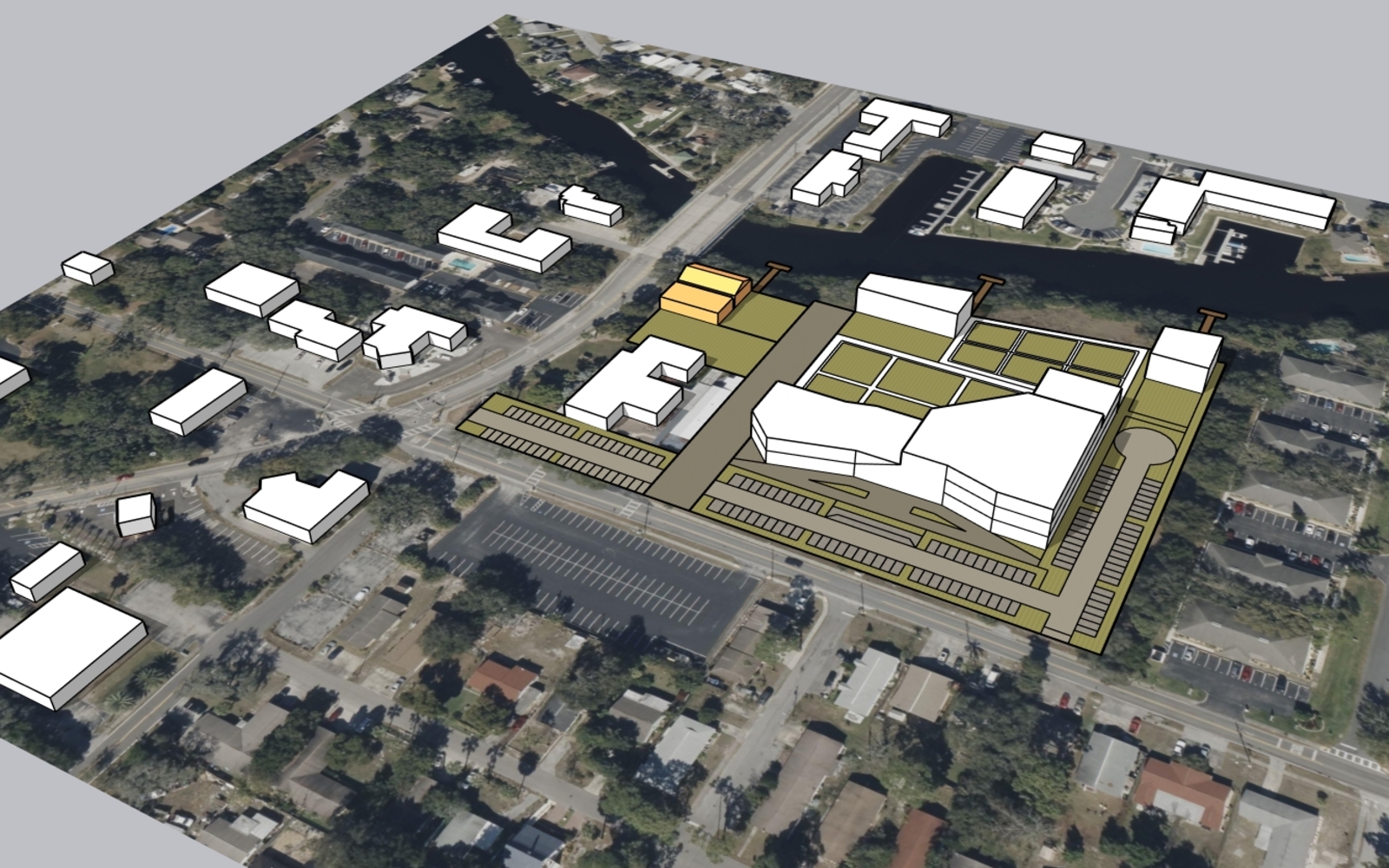
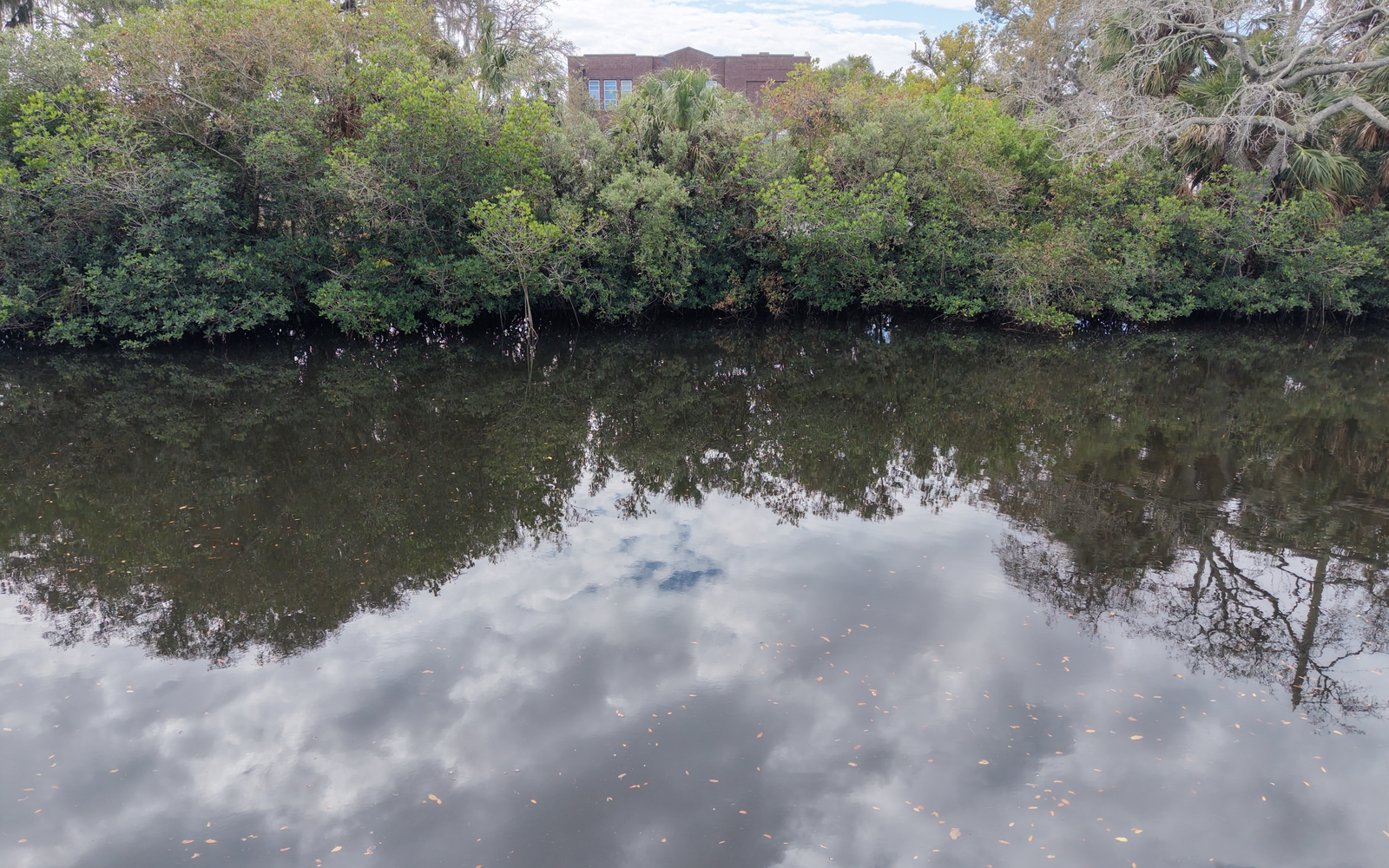
The original Gulf High School dates to 1922, designed by two women — one trained under Frank Lloyd Wright. It runs about 21,000 square feet with original floor-to-ceiling columns and an auditorium that historically held a U-shaped balcony, a genuine event asset if restored. The building was in active use recently, so the bones are functional rather than derelict. Beyond it, usable outbuildings, a large open field, an over-century-old ball field, and the Cotee River salt-wedge ecosystem round out the campus.
The study area draws about 1.84 million annual visits from roughly 360,000 unique visitors, with an average dwell near 112 minutes. Weekends carry about 58% of traffic and evenings dominate — a leisure and entertainment district, not a commuter center, which leaves the weekday daytime trough open for community and institutional programming.
The campus is phased so each piece stands on its own while building toward the full vision. Phase 1 activates the grounds for about $705,000 in CRA capital — kept outside the building to reduce liability and move fast — with food-truck space, river access, a bluff overlook, and the cleared northeast ball field. Phase 2A brings the ground floor back into use as a shell-ready incubator for nonprofit tenants; Phase 2B adds a cantilevered riverfront boardwalk and eco-launch.
Splitting sources and uses by phase changes the story the numbers tell. The near-term ask is about $3.95 million — roughly 10% of the total project cost — and it is fully fundable from CRA capital and one infrastructure grant, with no gap through Phase 2B. The larger gap appears only later: in Phase 3, where it depends on an institutional anchor, and in the long-term appendix, where the county and a private partner carry the conference and multipurpose facility.
BusinessFlare® is delivering a phased feasibility study and activation roadmap for the Gulf High School campus, in active iteration with the City, the CRA, and the SOS group through mid-2026.
Two site visits, a drone survey, Placer.ai market analysis, and the full-campus feasibility report with a companion financial model and south-parcel scenarios.
The revised, activation-first final-draft report (v5) — reorganizing the fitment, conservatory, and Community Hub concepts around a near-term activation strategy, with conceptual imagery — was delivered to the Pasco CIC project group on July 16, 2026 and is now under review. Project architect Rick Gonzalez, AIA is engaged on the adaptive reuse of the historic schoolhouse.
The final feasibility report for the Gulf High School / Old School site has been submitted to the City and the project group, closing out the reporting phase of the study. Next steps on the campus are being coordinated with the City.
Lock the near-term (~$3.95M) sources and uses, finalize the south-parcel recommendation, and support the institutional-anchor and grant applications that unlock later phases.